March 3, 2026
·
9 min read
Content or backlinks: web traffic SEO decision framework
A comparison framework for deciding whether to invest in content or backlinks to grow SEO traffic—model the traffic math, spot content vs. authority signals, weigh risks and constraints, and measure results with a simple KPI and experiment playbook.

If your organic traffic is flat, the worst move is “doing more SEO” without knowing which lever is actually limiting you: content coverage or authority. One gets you more keywords and better intent alignment; the other gets you into tougher SERPs and raises your ranking ceiling.
This comparison walks you through the decision context, the traffic math behind rankings and CTR, the signals that point to content vs. backlinks, and a fast table to choose quickly. You’ll also get guardrails for risk and a measurement plan that proves what worked.
Decision Context
You’re choosing where to put effort: more content, more backlinks, or a deliberate mix. The goal isn’t “more traffic” in the abstract. It’s qualified organic sessions that turn into signups, demos, or revenue—like ranking for “HIPAA compliant scheduling software” instead of “scheduling tips.”
Two growth levers
Content builds relevance and coverage, so you can match more queries with better pages. Backlinks build authority and trust, so Google treats your pages as safer bets.
Content often lifts rankings by improving intent match and internal linking, and it can raise clicks with better titles and snippets. Backlinks often lift rankings by increasing your site’s baseline competitiveness, especially in crowded SERPs.
If your pages don’t deserve to rank, links just speed up disappointment.
When it matters
This choice changes what you fund, ship, and measure. It shows up in weekly tradeoffs, not just strategy decks.
- Split budget between production and outreach
- Set quarterly roadmap: new pages vs linkable assets
- Hire a writer, editor, or outreach specialist
- Pick KPIs: rankings, referring domains, or conversions
If you can’t name the decision it affects, it’s not a framework yet.
SEO reality check
Most sites need both, because relevance without authority stalls, and authority without relevance wastes power. The real work is sequencing based on constraints—thin pages, weak technical SEO, brutal competition, or a tiny team. For a fuller breakdown of how these pieces fit together, see this practical SEO guide.
A clean site with strong pages can justify earlier link building. A messy site needs content and quality fixes first, because links won’t fix a bad experience.
Pick the bottleneck, then push on it hard.
Traffic Math Basics
Your SEO traffic can be modeled with one line: traffic = rankings × CTR × keyword coverage. Content mostly expands coverage and improves CTR, while links mostly move rankings; technical work keeps all three from leaking.
Rankings drivers
Rankings move when your page wins the comparison Google is already running. You’re not “building SEO”; you’re beating nearby alternatives.
- Match topical relevance to the query
- Build authority with strong links
- Satisfy intent with the right format
- Maintain technical health and crawlability
- Compete within the current SERP strength
When one input is weak, the others get taxed to compensate.
CTR and SERP
CTR is what happens after you rank, and it can double traffic without moving a single position. Two pages can sit at #3, but the one with “Free template” and review stars gets the click.
Titles, snippets, brand recognition, and rich results change perceived value fast. A boring snippet bleeds clicks to a sharper promise.
If you can’t outrank them yet, out-click them.
Coverage and intent
Coverage is how many real queries you’re eligible to rank for, across variations and intents. A thin page might only match “best CRM,” while a deep hub also catches “CRM for contractors,” “CRM pricing,” and “how to migrate.”
Content depth widens the keyword footprint, and internal links push that relevance to the right URLs. You capture more intents when you pair a strong pillar with focused supporting pages.
The fastest traffic gains often come from ranking for more things, not ranking higher for one thing.
Content Investment Signals
Content-first wins when you can fix what Google can already see on your site. It’s faster, safer, and easier to sustain than “renting” authority with links. Think: turning “we should rank” pages into “this answers my question” pages.
Coverage gaps
You’re leaving traffic on the table when your topic map has holes. Fill them, and rankings often move without a single new backlink. If you need a repeatable process, use this checklist for streamlining SEO content to spot what’s missing and prioritize updates.
- Missing core pages for primary jobs-to-be-done
- Thin clusters with one supporting article
- Outdated posts with stale screenshots and stats
- No comparison pages like “X vs Y”
- Weak internal linking to money pages
If you can point to two or more, content is your quickest lever.
Low authority ceiling
New sites feel boxed out on head terms, so they chase links too early. You can still win long-tail by matching intent perfectly and covering the topic deeper than the incumbents.
A “best CRM” page won’t land, but “CRM for 3-person construction crews” can. Build a tight cluster, answer every follow-up question, and make your internal links do the routing.
When your relevance is undeniable, authority becomes a multiplier, not a prerequisite.
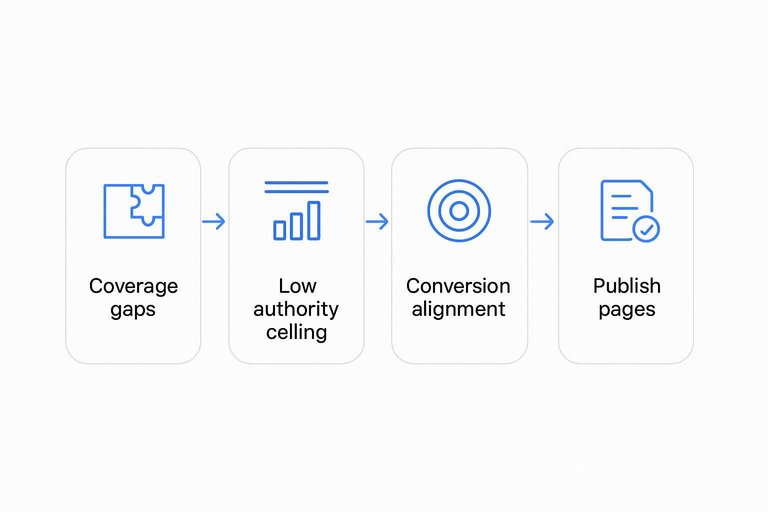
Conversion alignment
Traffic is only “good” if it matches what your product actually solves. Content-first is the fastest path when you can publish pages that pull buyers, not browsers.
- BOFU pages: pricing, alternatives, migration, integrations
- Use cases: role + industry + workflow pages
- Templates: “copy-paste” assets with clear next steps
- Product-led guides: “do X in Y” using your tool
If the page can close the loop in one session, publish it before you build links to it.
Backlink Investment Signals
You publish more and rankings barely move. That’s usually not a content problem. It’s an authority ceiling.
If links are the constraint, outreach can lift your entire site’s ability to compete. More pages won’t.
Competitive SERPs
Some SERPs are link-weighted by nature. You can write “better” and still lose.
- Competitors show higher domain-level authority and deeper referring domains
- Page-one results are brand-heavy, not niche blogs
- Your page ranks 5–20 with strong on-page basics
- Top results have obvious link velocity and fresh mentions
- SERP features favor trusted sources and citations
When good content stalls at 8th place, links are often the missing ingredient.
Plateau diagnosis
Stagnant impressions with solid content usually points to an authority limit. Your pages are eligible, but not trusted enough.
Look for rankings that briefly improve after an update, then settle back. That pattern often means you need stronger page-level links or more site-wide authority to break through.
Treat a flat impression curve as a signal to change inputs, not publish harder.
Asset readiness
Outreach works when you have something worth citing. Without that, you’re asking for favors.
- Linkable asset that adds proof, data, or utility
- Clear positioning with a simple “why you” story
- Credible authorship, experience, and transparent sourcing
- Target pages with proven intent and conversion value
- Internal links that pass value to priority pages
Build the asset first. Then scale the asks.
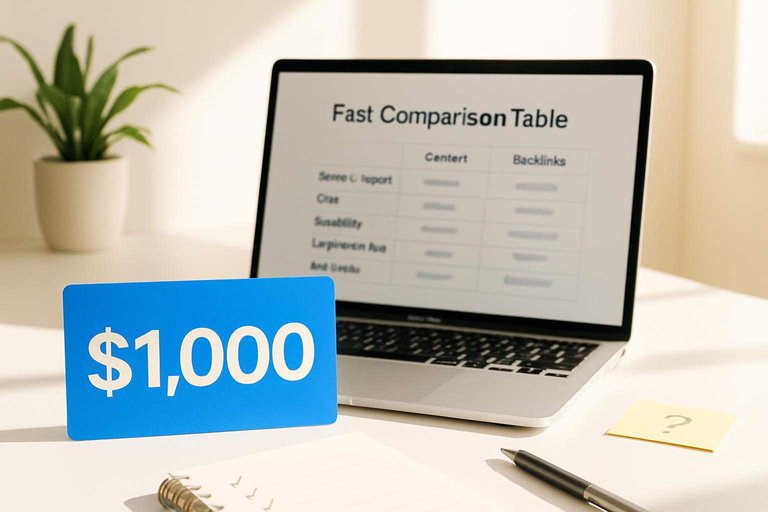
Fast Comparison Table
You’re deciding where to spend the next hour and the next $1,000. Use this table to pick the lever that fits your timeline and risk tolerance.
| Factor | Content | Backlinks | Decision cue |
|—|—|—|
| Speed to impact | Weeks to months | Days to weeks | Need speed? Links. |
| Durability | High if maintained | Medium, can decay | Want stability? Content. |
| Risk profile | Low, mostly time | Higher, penalties | Risk-averse? Content. |
| Cost profile | Time, SMEs, editing | Outreach, PR, fees | Cash-poor? Content. |
| Measurement | Rankings, clicks, leads | Ref domains, lift | Need clarity? Content. |
| Compounding effect | Topic clusters snowball | Authority raises all | Do both, sequence smart. |
Pick the lever that matches your constraint first, then build the other behind it.
Risk and Constraints
Your best SEO lever changes when risk and constraints dominate. Algorithm updates punish patterns, not intentions, and your ops bottlenecks decide what you can ship safely.
Quality pitfalls
Scaling content fast can turn into “more pages, less visibility.” The common failure modes are cannibalization, thin pages, E-E-A-T gaps, and index bloat that slows discovery.
Cannibalization shows up when three articles chase the same query and split signals. Thin pages look like 300 words of recycled SERP facts with no original proof. E-E-A-T breaks when no author credibility, firsthand experience, or citations backstop claims.
Index bloat is the quiet killer. Thousands of low-value URLs waste crawl budget and dilute site quality signals.
Link risks
Links move rankings fast, but mistakes compound quickly. The safest link building feels boring, specific, and hard to automate.
- Leaving paid-link footprints across the same sellers
- Chasing irrelevant domains for “DA” instead of topical fit
- Over-optimizing anchors with exact-match repetition
- Spamming outreach that annoys editors and buyers
If your link velocity looks engineered, you’re betting against enforcement, not competing on merit.
Resource constraints
Your team’s shape decides which lever pays back. Content ROI depends on subject-matter access, editing discipline, and approvals; backlinks ROI depends on relationship-building, PR judgment, and negotiation.
A slow legal review can kill timely content, even if ideas are strong. No SMEs means you publish “best practices” fluff, then wonder why it won’t rank. A weak outreach operator burns your brand with sloppy templates and follow-ups.
Pick the lever your org can execute cleanly for six months. That’s where compounding starts.
Measurement Playbook
You can’t choose “content vs backlinks” without measurement that survives bad weeks and good stories. Use a small set of KPIs, then run short tests that isolate what moved and why. If you can’t attribute the lift, you can’t scale it.
Content KPIs
Measure content like a product change, not a publishing habit.
- Track new ranking keywords by intent cluster
- Monitor impressions growth in Search Console
- Count pages reaching top-3 positions
- Watch engagement: scroll, return, on-page actions
- Attribute assisted conversions in analytics
Add one more: internal-link uplift, like “supporting page lifts money page.”
If content doesn’t move a pathway, you wrote a blog post, not an asset.
Link KPIs
Measure links as distribution and authority, not trophies.
- Score referring domains by relevance and traffic
- Track page-level link growth to target URLs
- Measure ranking lifts on target pages
- Monitor share of voice vs direct competitors
Treat “one great domain” as different from “ten weak ones.”
If rankings rise without link growth, your win came from something else.
Experiment design
Run a 4–6 week test so your decision is based on deltas, not vibes.
Pick two matched page sets, like 10 product pages vs 10 similar pages. Hold variables steady, like titles, templates, and internal links. Annotate every change, like “added 3 links” or “rewrote intro,” then compare lift vs baseline and vs the other set.
If you can’t name the lever, you didn’t run an experiment.
Choose Your Next SEO Lever and Prove It
- Diagnose the constraint: if you have clear coverage gaps and pages convert but don’t exist (or don’t match intent), prioritize content; if you’re stuck in competitive SERPs or your best pages plateau below a consistent position threshold, prioritize links.
- Validate readiness: publish/refresh the target pages first (asset readiness), then build links only to pages that deserve to rank and can capture demand.
- Run a 4–8 week test: pick a small page set, apply one lever at a time, and track rankings by URL, GSC clicks/CTR, and conversions—keep the winner and scale it with the same KPI baseline.
Frequently Asked Questions
- Does web traffic SEO still work in 2026 with Google AI Overviews reducing clicks?
- Yes—web traffic SEO still drives qualified sessions, but you’ll see more value by targeting high-intent queries and SERP features where clicks remain strong (product comparisons, local, “best X,” and problem/solution searches). Track outcomes beyond clicks, including conversions and assisted conversions in GA4.
- Do I need backlinks to rank new content, or can great content rank without links?
- You can rank without new backlinks for low-competition, long-tail keywords, especially on a site with existing authority and strong internal linking. For competitive terms, backlinks (or equivalent authority signals like strong brand mentions) are usually the difference between page 2 and page 1.
- How many backlinks do I need to increase web traffic SEO results?
- There’s no universal number; most wins come from a small set of high-quality, relevant links rather than dozens of low-value ones. Benchmark the top 3–5 ranking pages’ referring domains in Ahrefs/Semrush and aim to close the gap with fewer, better links.
- How long does it take to see web traffic SEO gains from content versus backlinks?
- Content updates often show early movement in 2–6 weeks (indexing, long-tail rankings), while net-new pages commonly take 6–12 weeks to earn steady traffic. Backlinks can shift rankings in 2–8 weeks after they’re discovered and reprocessed, with the biggest impact usually showing over 1–3 months.
- Can I use internal links, PR, or partnerships instead of traditional link building for web traffic SEO?
- Yes—internal linking improves crawlability and distributes authority, while digital PR and partnerships can earn high-trust editorial links that outperform manual outreach. The key is getting real third-party mentions/links from relevant sites, not sponsored directories or template guest posts.
Turn Framework Into Traffic
The content-vs-backlinks decision is clearer on paper than in practice—especially when you need consistent execution, measurement, and momentum month after month.
Skribra helps you publish daily SEO-optimized content and tap into a backlink exchange network to compound gains—start with the 3-Day Free Trial.
Written by
Skribra
This article was crafted with AI-powered content generation. Skribra creates SEO-optimized articles that rank.
Share: