February 13, 2026
·
Updated July 2, 2026
·
10 min read
How Web Traffic SEO Works for B2B Blogs
An explainer of how web-traffic SEO actually works for B2B blogs—map search demand to business outcomes, understand crawl/index/serve mechanics, build relevance and authority signals, and measure performance with a diagnostic mental model.

If your B2B blog “does SEO” but traffic still feels random, the problem usually isn’t effort—it’s understanding what Google is optimizing for. Rankings aren’t awarded; they’re selected moment by moment based on demand, eligibility, and perceived value.
This explainer breaks the system into parts you can control: how queries translate to outcomes, how pages get discovered and indexed, what relevance and authority really mean, which SERP features reshape clicks, and how to measure progress without fooling yourself.
Search Demand Map
Web traffic SEO is intent matching plus authority routing. You map buyer questions to the right pages, then push internal links so those pages win. Think “SOC 2 checklist” to a gated template, not your homepage.
Queries to outcomes
Keyword phrases are compressed versions of buyer intent. In B2B, they usually signal a stage, like “what is SSO” versus “Okta vs Azure AD.”
Problems: “reduce churn,” “prevent invoice fraud,” “HIPAA training requirements.”
Solutions: “best CPQ software,” “warehouse slotting algorithm,” “customer data platform.”
Evaluation: “Vendor X pricing,” “Vendor X alternatives,” “G2 reviews Vendor X.”
If you can label the stage fast, you can pick a page that actually closes.
SERP as marketplace
Google sells attention, then allocates leftovers. The SERP layout tells you who gets clicks and why.
- Ads dominate high-CPC commercial terms
- Snippets steal clicks from simple questions
- Videos win “how-to” and visual tasks
- Lists rank for “best” and comparisons
- Local packs capture near-me intent
When the SERP is stacked, your ranking target must change, not just your keyword.
Traffic quality filter
High-volume terms often underperform because they attract the wrong reader. “Project management” brings students, job seekers, and consumers, not your buying committee.
You fix it by tightening the query-to-path match. Aim for phrases like “project management software for agencies” that land on a demo-ready page.
Volume is a vanity metric if the next click can’t convert.
Crawl, Index, Serve
For your B2B blog URL to show up in search, Google has to complete four internal jobs. It must discover the URL, render what’s on it, index a version worth keeping, then retrieve it during a real query like “SOC 2 vendor checklist.” Miss any step, and the page is effectively invisible. If you need a clearer baseline on the end-to-end mechanics, see how organic traffic is created.
Discovery pathways
Bots can’t rank what they can’t find, and most discovery still starts with known URLs. You control discovery with deliberate pathways, not hope.
- Internal links from crawled pages
- XML sitemap URL submissions
- RSS/Atom feeds for new posts
- External backlinks from other sites
- URL inspection and recrawl signals
Orphan pages aren’t “low priority.” They’re often undiscovered.
Rendering realities
Google doesn’t index your React app. It indexes the rendered output it can actually fetch and process.
If JavaScript is required to print the main content, rendering becomes a second queue and a second failure point. Blocked CSS/JS, gated APIs, or 8-second TTFB can turn a rich page into a thin shell that looks like “Loading…” to the crawler.
If Google can’t reliably render it, your rankings are capped before they start.
Index selection
Indexing isn’t a guarantee after a crawl. Google clusters similar URLs, picks canonicals, and skips pages that look redundant.
Duplicate paginated URLs, faceted parameters, and “same post, different tag path” often get folded into one chosen URL. Thin pages also lose, like a 300-word “What is X?” post that matches five better versions on your own site.
Your job is to make one URL the obvious best answer, then remove the rest of the confusion.
Serving decision
At query time, Google isn’t asking “Should I index this?” It’s asking “Which indexed page deserves this click?”
- Match the query intent using text, headings, and entities.
- Apply quality systems like helpful content and spam classifiers.
- Weight signals per query, like links, freshness, and location.
- Pick the best URL from clusters and duplicates.
- Re-rank based on SERP context, like snippets and features.
Rankings change because the weighting changes, not because your page “broke.”
Relevance Signals
Topic representation
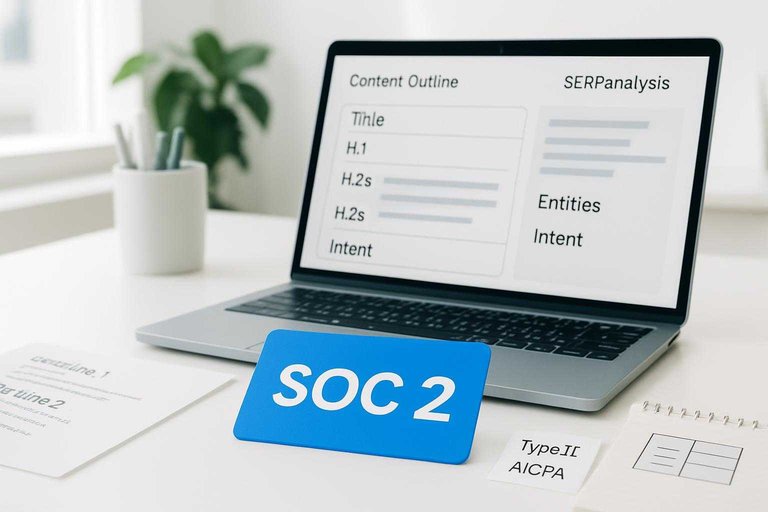
Your on-page copy gets turned into features a model can score, not just words a human reads. A title like “SOC 2 audit checklist” plus headings, entities, and nearby terms tells Google what bucket you belong in.
Models look for consistent cues:
- Title and H1 as the primary label
- H2s as subtopics and scope
- Entities like “SOC 2,” “Type II,” “AICPA”
- Co-occurrence like “controls,” “evidence,” “auditor”
If your terms disagree across sections, you don’t look “broad.” You look confused.
Intent satisfaction
Structure makes intent obvious, then easy to complete. You reduce pogo-sticking when readers can grab the right chunk fast.
- Put a crisp definition in the first screen
- Add a comparison table when choices exist
- Use steps for any repeatable process
- Show one concrete example with numbers
- Call out “who this is for” explicitly
Win the click, then win the next 30 seconds. That’s where relevance becomes durable. (This aligns with Google’s guidance on helpful, reliable, people-first content.)
Freshness thresholds
Updates only help when the query expects “as of now” accuracy. In B2B, that’s usually tools, pricing, regulations, and vendor claims.
Some topics decay fast:
- “Best ETL tools” when features ship weekly
- “Salesforce pricing” when tiers change
- “GDPR fines” when guidance updates
Others are slow:
- Framework explanations
- Role-based how-tos
- Mental models and checklists
Refresh when reality changes, not because the calendar did. That’s how you avoid busywork updates nobody rewards.
Authority Flow
Links behave like votes because they transfer scarce attention across the web. But the vote is weighted by who votes, where they place it, and what they point at. In B2B, one relevant industry backlink can beat ten random directory mentions.
External link mechanics
Backlinks pass authority when the link helps a reader and sits near related meaning. Anchor text, placement, and topical proximity act like context clues for what deserves to rank.
A practical filter:
- Anchor: descriptive, not stuffed
- Placement: in-body, not footer
- Proximity: near matching terms
- Source: same buyer category
- Target: best-fit page
If the link feels off-topic to a human, Google discounts it faster than you expect.
Internal linking loops
Use internal links to move earned authority toward the pages that drive pipeline.
- Build a hub page for one core topic.
- Link every deep post up to the hub.
- Add contextual links between sibling posts.
- Use breadcrumbs to reinforce hierarchy.
- Link the hub from nav or high-traffic pages.
When your hub becomes the obvious “center,” crawlers stop missing your best depth content.
Trust constraints
Authority only spends well when the site looks real, consistent, and earned. If your link profile screams manipulation, the algorithm caps how much benefit you can get.
Common limiters include sudden link spikes, repetitive anchors like “best B2B software,” and pages that exist only to host links. Weak brand signals also hurt, like no team page, no original research, and no mentions outside your site.
Fix trust first, then chase links. Otherwise you’re pouring votes into a ballot box nobody counts.
B2B SERP Features
Different SERP features reward different behaviors, and B2B clicks usually go to the clearest promise.
| SERP feature | What it rewards | Best for B2B queries | How to win clicks |
|---|---|---|---|
| Featured snippet | Direct, structured answer | Definitions, processes | Tight intro, lists |
| People Also Ask | Coverage, clarity | Consideration questions | FAQ blocks, crisp H2s |
| AI overview | Consensus, authority | Broad, early research | Original angles, citations |
| Sitelinks | Brand trust, structure | Company terms | Clean IA, strong nav |
| Video results | Demonstration, proof | How-to, product tours | Chapters, clear title |
Pick one feature to target per post, then format the page like it already won.
---Content Architecture
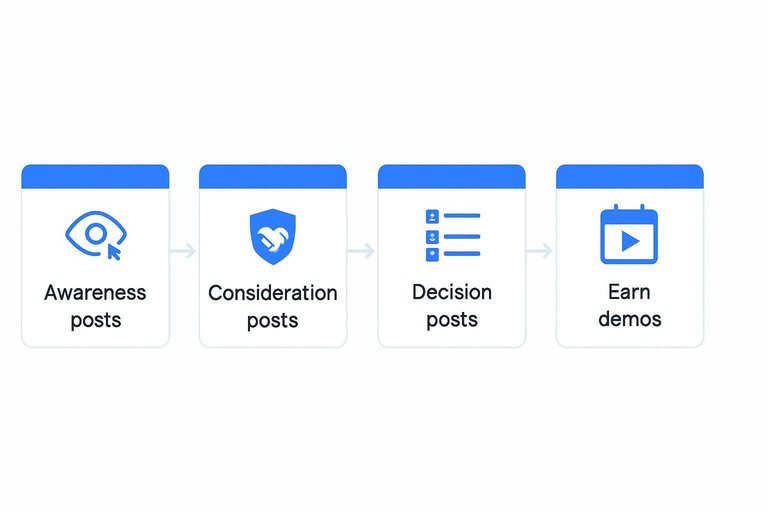
Your blog needs a structure that scales without turning into a pile of “random posts.” Think in funnel stages: awareness posts earn first clicks, consideration posts earn trust, and decision posts earn demos.
Architecture prevents cannibalization by assigning each topic a job. One page owns the core intent, and the rest support it.
Cluster design
Clusters work when one pillar owns the broad intent and supporting posts own the narrow intent. It keeps rankings clean, and it makes internal links feel inevitable.
Set boundaries like this:
- Pillar: “B2B website traffic from SEO” (overview, definitions, options)
- Support: “SEO traffic vs paid traffic” (comparison intent)
- Support: “B2B SEO KPI dashboard” (measurement intent)
- Support: “SEO content brief template” (execution intent)
Link up for depth and down for choice, using specific anchors like “SEO KPI dashboard” instead of “click here.” That’s how pages share authority without fighting for the same query. If you need a baseline to map pillar and support topics, start with this SEO guide for topic planning. If you want the broader system behind creating, ranking, and refreshing these assets, see how SEO content marketing works.
Cannibalization causes
Cannibalization usually isn’t a mystery; it’s a planning failure. Google picks the clearest match, then quietly ignores the rest.
Cannibalization causes
Watch for these three triggers before you publish.
- Targeting the same primary keyword across multiple URLs
- Reusing near-identical titles like “B2B SEO Strategy”
- Shipping the same template for different intents
Google tests which page satisfies intent fastest, then consolidates impressions there. Fix the overlap, or you’ll keep “publishing” into a vacuum.
Information scent
Information scent is the user’s gut feeling that the next click will pay off. Crawlers behave similarly, following patterns that suggest stable meaning.
Use predictable signals:
- Navigation labels that match intent, like “Templates” or “Benchmarks”
- URL patterns that group topics, like /guides/, /templates/, /benchmarks/
- Summaries that preview the answer, like “Includes a 12-metric KPI list”
When your labels and URLs make promises, people go deeper. Depth is where internal links start compounding.
Technical Performance Levers
Technical SEO for B2B blogs is mostly about removing friction for Google and users. You’re not chasing tricks; you’re protecting crawl budget, indexation, and page experience.
- Keep TTFB low with caching and fast hosting
- Ship clean internal links and avoid orphan pages
- Prevent index bloat with noindex, canonicals, and pruning
- Optimize Core Web Vitals on real templates, not one-off pages
- Ensure correct rendering: JS, robots.txt, and sitemaps aligned
If Google can crawl it fast, render it reliably, and trust what’s canonical, rankings stop leaking. (See Google’s overview of page experience in Search results.)
Measurement Mental Model
Rankings don’t create pipeline by magic. They create visibility, then sessions, then repeat touches that show up later in CRM. Treat measurement like a mechanical system: find the first metric that moved, then fix that layer.
Leading indicators
These metrics move before pipeline moves, so they tell you what broke first.
| Metric | Moves first when | What it implies | What to check next |
|---|---|---|---|
| Impressions (GSC) | Pages surface more | Query coverage expanded | Intent match, titles |
| Avg position (GSC) | Relevance improves | Better ranking signals | SERP parity, depth |
| CTR (GSC) | Snippet wins/loses | Click appeal changed | Title, description, rich results |
| Indexed pages (GSC) | Coverage changes | Indexing allowed or blocked | Robots, canonicals |
| Crawl stats (GSC) | Discovery shifts | Googlebot access changes | Speed, internal links |
If impressions rise without sessions, your snippet is losing the click. If sessions rise without leads, your page is matching the wrong stage or sending readers to the wrong next step. If you need an execution baseline, use this checklist for streamlining SEO content to standardize what gets published and what gets measured.
Attribution reality
SEO attribution looks broken because buying journeys aren’t linear. A prospect might read one post, disappear for weeks, then return via a bookmark, a forwarded email, or a Slack link.
That creates messy patterns:
- Long sales cycles delay “credit” in CRM.
- Return visits look like direct traffic.
- Multi-touch journeys split impact across channels.
- Dark traffic hides the real referrer.
So you measure momentum, then confirm impact with pipeline cohorts.
A practical B2B compromise:
- Use GSC to measure query-level outcomes (impressions, position, CTR).
- Use GA4 to measure page-level behavior (engaged sessions, scroll depth proxies, next-page paths).
- Use your CRM to validate business impact (lead quality, opp creation, influenced pipeline), even if it’s imperfect.
Diagnosis workflow
Use a fixed order so you don’t tweak copy on a page that can’t rank.
- Isolate intent by query cluster and page goal.
- Check indexability in GSC coverage and canonical tags.
- Compare the SERP to top results for format and angle.
- Evaluate content gaps by subtopics and missing proof.
- Adjust internal links and copy, then re-measure.
Fix the constraint, not the symptom.
Turn the system into a repeatable SEO operating loop
- Start with a search demand map: pick queries where the SERP shows buyers like yours and define the outcome you want (demo, shortlist, education).
- Make the page eligible: ensure discovery (links/sitemaps), renderable content, clean indexing signals, and fast, stable performance.
- Win selection: match intent with clear topic representation, satisfy the task better than the current winners, and keep key pages fresh when the SERP expects it.
- Compound authority and learn: build external credibility, tighten internal linking to the right hub pages, then measure with leading indicators and a diagnosis workflow—not last-click myths.
Frequently Asked Questions
- Does web traffic SEO still work for B2B blogs in 2026 with AI answers and zero-click searches?
- Yes—B2B blogs still grow qualified traffic when you target mid- to long-tail queries and optimize for SERP features like “People also ask” and featured snippets. Expect some head terms to send fewer clicks, but conversion intent often concentrates in specific, high-value queries.
- Do I need backlinks for web traffic SEO on a new B2B blog, or can internal links and content alone drive traffic?
- You can get early traffic with strong content and internal linking, but backlinks usually accelerate rankings and widen the keyword set you can win. A practical target is 5–20 relevant referring domains to key pages to break out of the “low authority” ceiling in many B2B niches.
- How long does web traffic SEO take to increase traffic for a B2B blog?
- Most B2B blogs see first measurable lifts in 4–8 weeks (indexing, impressions, early long-tail wins) and more reliable traffic growth in 3–6 months. Competitive categories and higher-ticket keywords often take 6–12 months to reach page-one consistency.
- How do I measure whether web traffic SEO is bringing the right B2B visitors, not just more sessions?
- Use Google Search Console to track non-branded clicks and top queries, then tie those landing pages to GA4 conversions (demo requests, contact forms) and CRM-sourced pipeline. A strong signal is rising clicks from problem/solution queries plus increasing conversion rate on organic landing sessions.
- Can I use paid search or LinkedIn ads instead of web traffic SEO to grow a B2B blog audience?
- Paid can replace SEO traffic volume in the short term, but it usually costs more per incremental visit and stops when spend stops. The best approach is often using ads to validate topics and offers while SEO compounds evergreen traffic over months.
Turn SEO Mechanics Into Output
Once you understand demand mapping, relevance, authority flow, and technical levers, the real challenge is executing consistently enough to grow B2B organic traffic.
Skribra generates and publishes SEO-optimized B2B articles at scale—complete with keywords, meta, formatting, and images—so your content architecture compounds over time. Start with the 3-Day Free Trial.
Written by
Skribra
This article was crafted with AI-powered content generation. Skribra creates SEO-optimized articles that rank.
Share: