June 16, 2026
·
9 min read
How to Do SEO for Affiliate Marketing: 11-Point Checklist
An 11-point checklist for doing SEO for affiliate marketing—set a realistic affiliate SEO gameplan, pick offers and niches that can rank, map keywords to the right page types, and build a measurement-and-refresh loop that keeps content compliant and competitive.

Affiliate SEO fails when you publish “best” pages on autopilot and hope commissions follow. The SERP already tells you what Google rewards—and most affiliate sites lose because they ignore intent, page type, and trust signals.
This checklist gives you a practical workflow: how to choose offers that can actually compete, turn keywords into a clear page map, write briefs that match what’s ranking, and keep technical and compliance basics from quietly capping your growth.
Affiliate SEO gameplan
Affiliate SEO works when you treat it like product work, not content volume. Pick offers you can stand behind, map intent like a buyer, build pages that answer fast, then earn trust with proof and clarity. Measure what matters, fix what’s broken, and avoid shortcuts that create fragile rankings.
What success means
Success is ranking pages that pull in the right kind of click, not just any click. You want visitors who are already comparing options, understand your disclosure, and can complete the next step without friction.
Imagine a “best X for Y” page that matches a real use case, shows tradeoffs, and links to a few programs you actually support. It wins because it’s useful, not because it’s loud.
Core SEO constraints
Affiliate SEO has hard constraints, and fighting them wastes months. Treat these as non-negotiables, then build your workflow around them.
- Write for users first, then optimize second
- Make pages crawlable, fast, and indexable
- Disclose affiliate relationships clearly and early
- Match intent with the right page format
- Avoid “tricks” that break on updates
When you respect constraints, you stop gambling and start compounding.
Tools you need
You don’t need a giant stack, but you do need coverage across research, QA, and measurement. The goal is fewer tools that you actually use weekly.
Minimum setup: a keyword research tool, a way to review live SERPs, a crawler for technical issues, analytics, a rank tracker, link monitoring, and a reusable content brief template. A plain spreadsheet can handle prioritization if you’re disciplined.
Your edge isn’t the tool. It’s the consistency of your checks.
Offer and niche selection
Pick offers you can rank for and still talk about credibly. Otherwise, you’ll publish a lot and win nothing.
- List 10–20 product categories you can explain without bluffing.
- Check the SERP for each category and note who dominates page one.
- Drop niches where every top result is a major publisher or brand store.
- Keep niches where you can add first-hand angles, comparisons, or workflows.
- Choose 1–2 offers with clear intent, stable demand, and fair commissions.
If you need a refresher on how to evaluate competition and search intent, follow this SEO guide for ranking offers.
You’re not choosing a product. You’re choosing a search battlefield you can actually win.
Keyword-to-page map
A keyword-to-page map stops “random content” and turns affiliate intent into a clear publishing plan—especially when you’re publishing at volume and need each piece to land on the right page type.
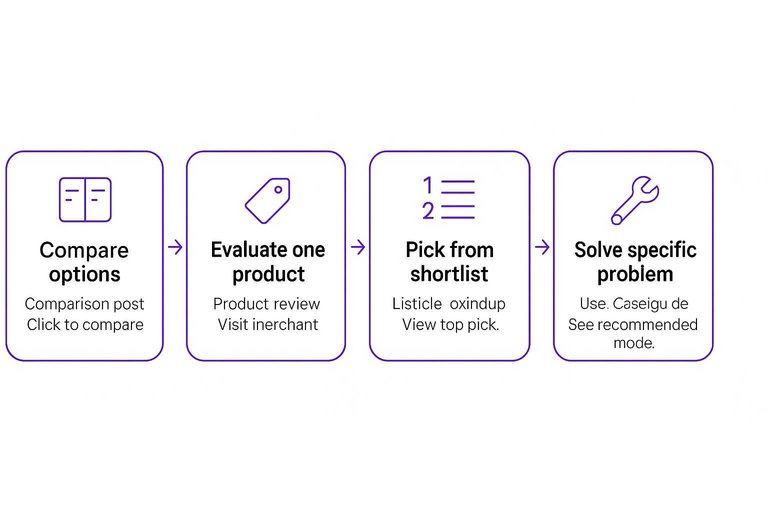
| Affiliate intent | Keyword pattern | Best page type | Primary CTA |
|---|---|---|---|
| Compare options | best X, X vs Y | Comparison post | Click to compare |
| Evaluate one product | review, pros and cons | Product review | Visit merchant |
| Pick from a shortlist | top, recommended, under $X | Listicle roundup | View top pick |
| Solve a specific problem | for beginners, for small spaces | Use-case guide | See recommended model |
If a keyword doesn’t fit a row, don’t publish yet—create the missing page type first. Tools like Skribra can help operationalize the map by generating SEO-structured drafts (titles, formatting, meta descriptions, and keyword focus) that match the intended page type, so your publishing cadence stays consistent without drifting into mismatched intent.
11-Point Checklist
Use this as a publish-ready checklist for an affiliate page set, not a theory lesson. You’re aiming for two wins at once: rankability and compliance.
Print it. Or paste it into your project tracker. If you want an even more operational companion, keep this checklist for streamlining SEO content handy. Then ship pages you can stand behind.
1) Program due diligence
Bad terms turn great rankings into wasted work. Verify the rules before you write a single line.
- Confirm commission rate, payout rules, and reversal terms.
- Check cookie window and attribution model details.
- Review allowed traffic sources, including email and paid search.
- Read brand bidding and trademark rules for ads.
- List prohibited claims, incentives, and coupon language.
Do this first, or you’ll rewrite later under pressure.
2) Intent-first keywords
Affiliate SEO works when the query already wants a decision. Group keywords by intent, not by volume.
- BOFU: “best [product] for [use]”
- BOFU: “[product] vs [product]”
- BOFU: “[product] review”
- MOFU: “[product] alternatives”
- BOFU: “[brand] coupon” or “discount”
When patterns match intent, your page type becomes obvious.
3) SERP pattern audit
You don’t need guesswork. The results page tells you what Google expects and what users reward.
Open the top results and label each page type, like listicle, single review, category page, or forum thread. Note the angle, like “budget picks” or “for beginners,” and the depth, like how many products they cover and what sections repeat. Then decide if you can beat the pattern with better clarity, fresher testing, or a tighter match to intent.
If every top result is a deep comparison, a thin review won’t survive.
4) Page type matching
Ranking gets easier when your format matches the query’s job. Pick the page type before you outline.
- Use single review pages for “[product] review” and “is [product] worth it.”
- Use comparisons for “X vs Y” and “X vs Y vs Z.”
- Use listicles for “best,” “top,” and “for [use case].”
- Use category hubs for broad topics with many sub-intents.
- Use informational bridge pages for “how to,” “what is,” and “why” queries.
Match the SERP’s dominant format, then win on detail and trust.
5) E-E-A-T signals
Affiliate pages face extra skepticism, from users and algorithms. Add visible proof that you’re careful and honest.
- Author bio with relevant experience
- Firsthand testing notes and photos
- Citations for non-obvious claims
- Update policy with last updated date
- About page and contact path
Put disclosures where readers decide, not only in the footer.
6) Conversion-safe CTAs
CTAs can convert without crossing compliance lines. You’re guiding a click, not promising outcomes.
Use neutral, accurate language like “Check price,” “See features,” or “View plans,” and avoid guarantees like “best,” “cheapest,” or “works for everyone” unless you can substantiate. Place one primary button above the fold near the main verdict, and another mid-page after key objections, like pricing and alternatives.
If your CTA would feel wrong in a legal review, rewrite it now.
7) On-page essentials
On-page SEO is boring on purpose. Boring ranks.
- Write a title that matches intent and names the use case.
- Use one clear H1, then H2s for repeated SERP sections.
- Add internal links to the hub and related comparisons.
- Use descriptive image alt text for meaningful images.
- Add schema only when it fits, like FAQ where appropriate.
Do the basics cleanly, and your content gets a fair fight.
8) Content that wins
Most affiliate pages lose because they skip decision-critical blocks. Build the sections readers hunt for.
- Pros and cons with real tradeoffs
- Who it’s for and not for
- Alternatives and why they differ
- Setup steps or first-use walkthrough
- Pricing context and plan differences
Answer the decision, not just the definition.
9) Internal linking system
Affiliate sites rank faster when pages reinforce each other. Treat internal links like a relevance engine.
Create hubs for each main category, then link out to spokes like individual reviews, comparisons, and “best for” lists. Use breadcrumbs for structure, and add contextual anchors inside the sections where the reader would naturally branch, like “Alternatives” or “Best for beginners.”
If three or more pages point at the same intent, you’re building authority, not clutter.
10) Technical hygiene
Technical issues don’t just hurt rankings. They waste your crawl budget and your time.
- Set canonicals to prevent duplicates and parameter mess.
- Confirm noindex rules for thin, tag, or filter pages.
- Fix obvious speed issues like oversized images.
- Check mobile layout, buttons, and interstitials.
- Keep URLs short, stable, and readable.
Your best content can’t rank if it can’t be indexed cleanly.
11) Link earning basics
You don’t need shady links to compete. You need a reason for others to reference you.
- Digital PR hooks, like original comparisons
- Resource pages and curated tools lists
- Partnerships with complementary creators
- Linkable assets, like checklists or templates
- Don’t: buy links or run link schemes
Earned links scale. Manipulated links explode later.
Content brief template
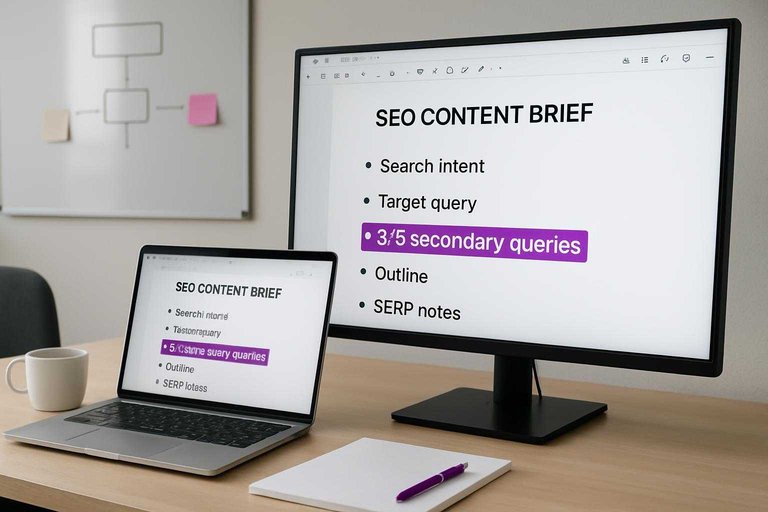
You need a brief that turns a keyword into a publishable page, without guesswork. Consistency beats “creative” when you’re scaling affiliate content.
- Define the search intent and the one-sentence promise of the page.
- Specify the target query, 3–5 secondary queries, and the angle you’ll own.
- List the products to include, plus inclusion and exclusion rules.
- Provide the outline with required headings, comparison criteria, and internal links.
- Add SERP notes: must-cover subtopics, objections, and the best-fit CTA.
If your brief can’t be scored yes/no, your draft will drift. For review-style pages, align requirements with Google Search’s Reviews System to avoid thin, template-like writeups.
Measurement and iteration
Measurement keeps your affiliate SEO honest. You track what moves, then change pages for a reason.
Build a small dashboard around rankings, clicks, and conversions by page. When something drops, diagnose first, then refresh fast.
Rank and SERP checks
Rankings alone hide the real story. SERPs change shape, and your page can lose clicks without “dropping” much.
Watch a short list of target queries per page, plus a few close variants. Track SERP features that steal attention, like product grids, AI answers, “Popular products,” and video blocks. Note competitor changes, including new angles, fresher dates, tighter comparisons, or better media.
When the SERP shifts, your content has to shift with it.
Quality and compliance QA
Affiliate pages break in boring ways. A quick QA pass prevents leaks that rankings cannot fix.
- Confirm affiliate disclosure is visible and accurate
- Remove unsupported claims and vague superlatives
- Update screenshots to match the current UI
- Verify pricing language stays non-specific
- Fix broken links and messy redirects
Do this every publish and every refresh, or small issues compound fast.
Refresh workflow
Refreshing works when you follow the SERP, not your hunches. Treat updates like a repeatable operation.
- Re-audit the SERP and rewrite to match current intent.
- Add firsthand details: photos, steps, caveats, and edge cases.
- Improve weak sections: comparisons, FAQs, and decision criteria.
- Update internal links to and from the page.
- Request reindexing when changes are meaningful.
Make one strong refresh, then measure again before you touch anything else.
Put the Checklist on a Weekly Cadence
- Start with one niche + one primary page type (e.g., “best,” “review,” or “vs”) and build a keyword-to-page map before writing.
- Publish using the content brief template, then run a pre-flight QA: disclosures, claims, CTAs, internal links, and on-page essentials.
- Check rankings and SERP changes on a schedule (weekly for priority pages), and note shifts in page types, angles, and competitors.
- Refresh the pages that are close to winning first: tighten intent-match, add missing comparisons/proof, improve internal links, and fix any technical or compliance issues.
Automate Your Affiliate SEO Pipeline
Turning an affiliate SEO gameplan and checklist into consistent briefs, publishing, and iteration is where most sites stall without enough time or writers.
Skribra generates SEO-optimized affiliate content with keywords, meta descriptions, images, and WordPress publishing—so you can execute your keyword-to-page map faster and iterate from performance data; start with the 3-Day Free Trial.
Written by
Skribra
This article was crafted with AI-powered content generation. Skribra creates SEO-optimized articles that rank.
Share: